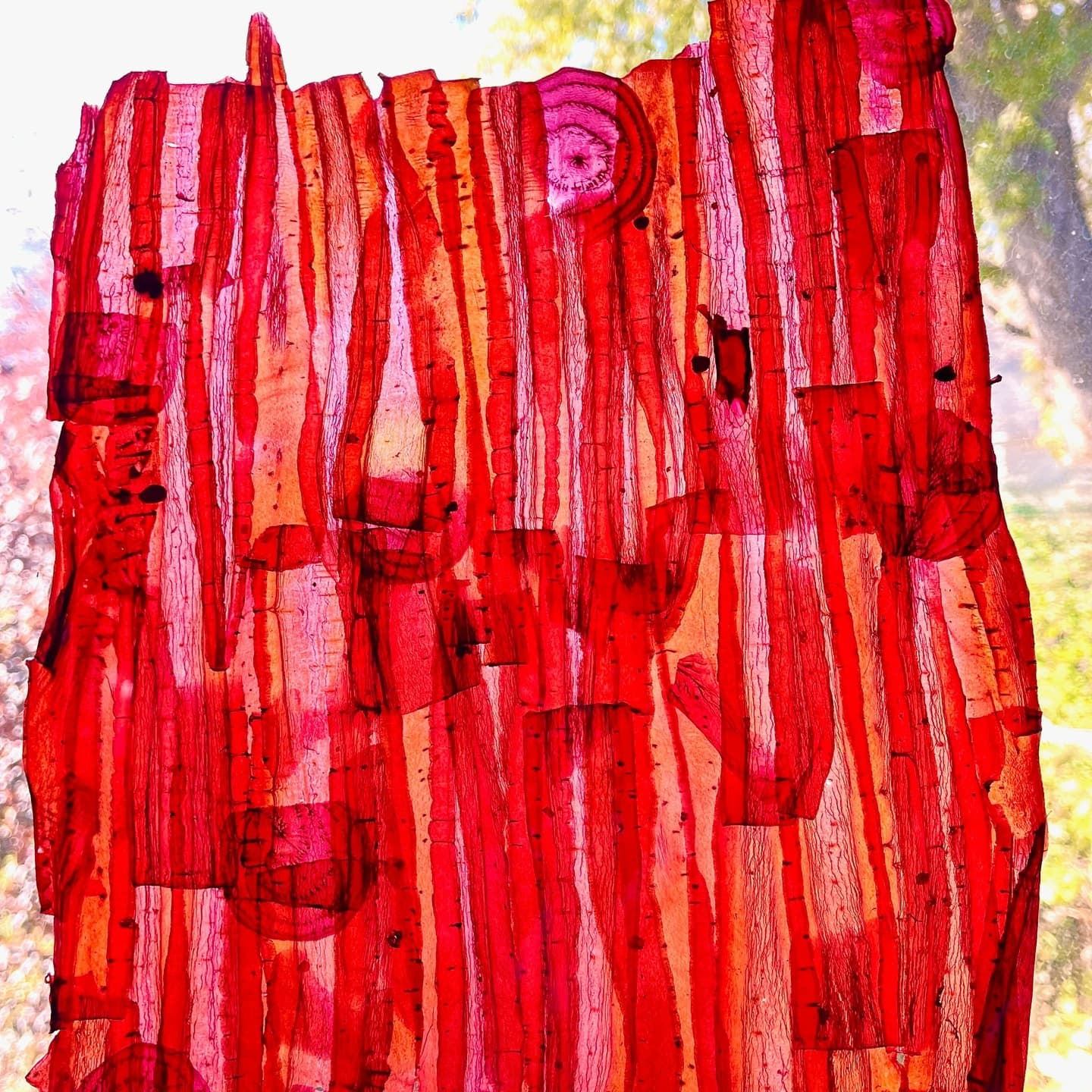
Lac extract
A natural red dye. Catherine dyed carrot and beet papyrus in lac for the glowing sheet at the top of the home page.

How a sheet is made
“It’s strong, pliable, treatable and gives much enjoyment. I love thinking about where it comes from, how it can be treated and what I can make from it. Pure joy.”
Catherine Parker, from her Art page
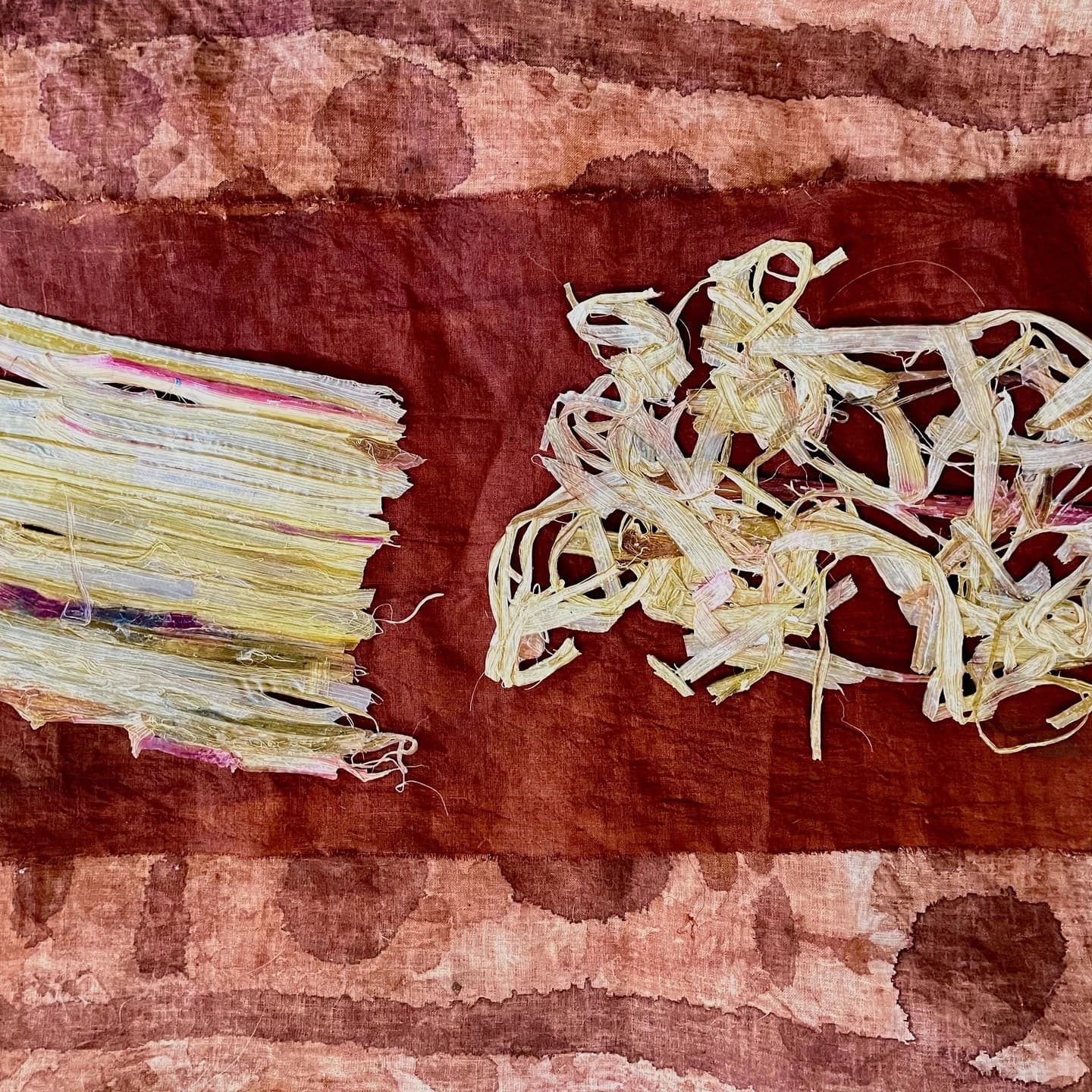
“Vegetable and fruit papyrus (or paper) caught my attention a few years ago and I have loved making it.”
Papyrus is made from whole strips rather than pulp, so a sheet keeps the fibres, seeds and colour of what it was. The drying is lengthy, and Catherine has now worked it out for most fruit and vegetables.
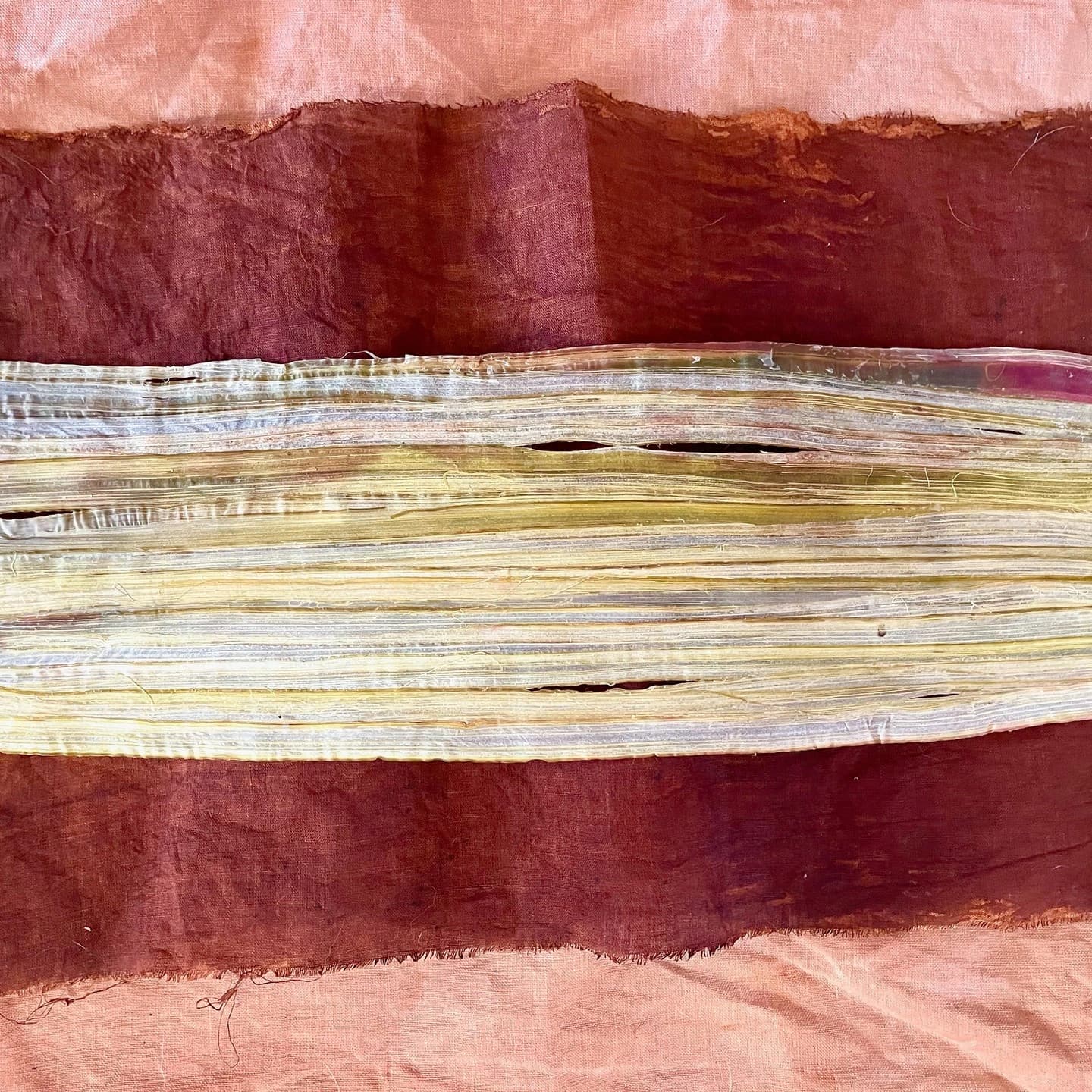
Beets, carrots, rhubarb or apples, cut into long, thin strips.
The strips go down edge to edge, overlapping a little, so they knit into one sheet.
Dried slowly. Some are then dyed, like the carrot and beet sheet in lac.
She also works with rust. The vegetables bring their own colour, too.
A natural red dye. Catherine dyed carrot and beet papyrus in lac for the glowing sheet at the top of the home page.
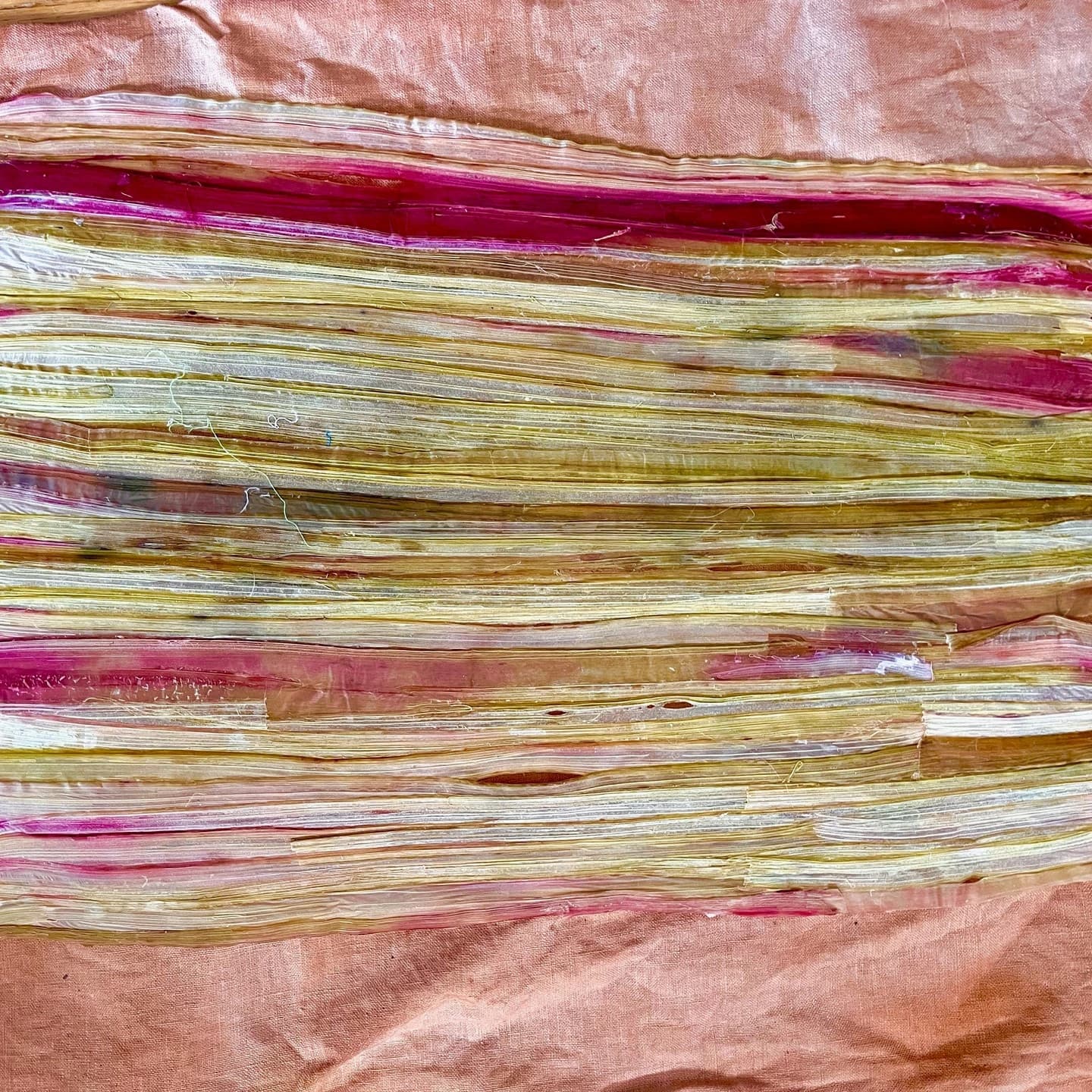
Fermented persimmon, once used to waterproof sails, umbrellas and wood. It stains the linen under her rhubarb papyrus, and a summer in the sun darkened one of those cloths.
“I’ve discovered that dyeing paper in natural dyes and indigo is endlessly fascinating …”
“Flat pieces of papyrus can be turned into vases … my current obsession.”
Catherine Parker
Catherine also makes gel prints and collage and is part of a collage collective in Regina. Her beeswax collages turn up in the journal as far back as 2007.